
Maryland Planning Guide

Best Storage for Decluttering a House in Maryland

The best storage plan for decluttering starts with editing first, then creating clean keep-zones that are easy to maintain.

When people search for storage for decluttering a house, they often assume the answer is more bins. In practice, the right answer is a sequence: edit first, assign category boundaries second, and only then choose storage that supports what stays.

This guide walks through that sequence so you can reduce visual noise, avoid buying the wrong products, and build storage zones that hold up in real Maryland households. If you want implementation help, our Storage Planning for Decluttering and Downsizing in Maryland and Home Organization teams can step in hands-on.

Maryland-relevant planning guidanceStep-by-step sequence to reduce overwhelmMaintenance principles for long-term retention
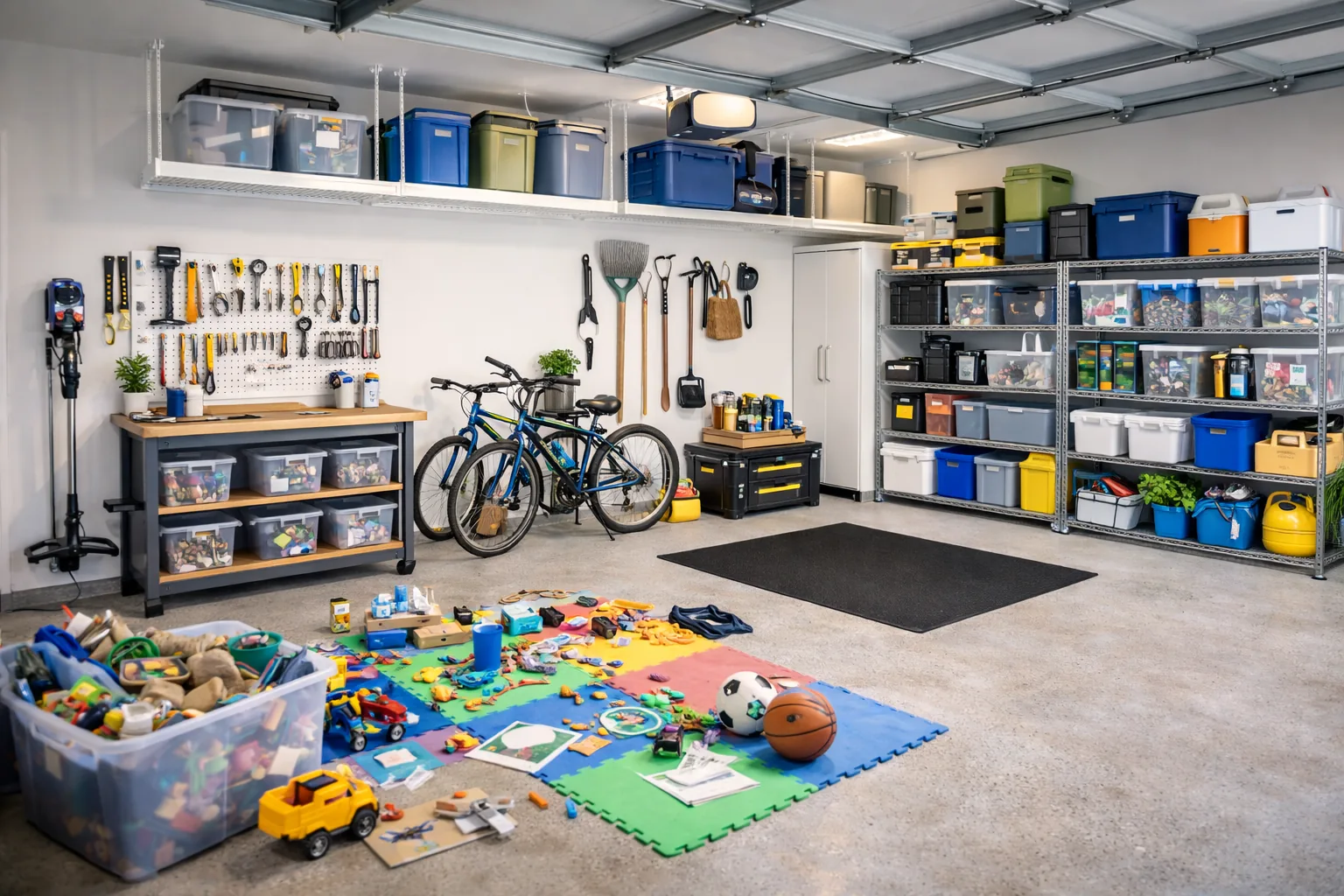
Family garage organized with labeled storage, tools, and play zones in Maryland
Private In-Home Service
Strategic + Hands-On

Private Maryland Consultations

Tell us your top clutter priorities, location, and timeline. We will recommend the best starting plan.

  • Maryland-relevant planning guidance
  • Step-by-step sequence to reduce overwhelm
  • Maintenance principles for long-term retention
  • Optional professional implementation support

Start with: the project planner or team@decluttermaryland.com

What to Expect

Clear systems, elegant execution, long-term ease.

Every Declutter Maryland engagement is tailored to your household while following a disciplined implementation framework designed for long-term sustainability.

4Clear steps you can start with
Hands-OnProfessional support available when needed
MarylandLocal guidance grounded in real homes and transitions
PracticalDesigned for real households and schedules

Often Helpful For

Upscale homeowners, elderly homeowners, and executive families seeking high-touch organization support in Maryland.

How to Begin

Build a quick project brief or email team@decluttermaryland.com with your location and top priorities.

Start by Reducing Volume Before You Buy Storage

Storage products can only support a decision you have already made. If categories are still mixed, sentimental items are unresolved, or you do not know what needs to stay accessible, containers simply hide the problem and make future resets harder.

Begin with one zone at a time and sort into clear decisions: keep in active use, keep in long-term storage, donate, recycle, or remove. Once those decisions are visible, storage becomes simpler, cheaper, and more intuitive.

Choose Storage by Access Pattern, Not by Aesthetic Alone

The best decluttering storage systems separate daily-use items from occasional-use items. Open baskets, drawer dividers, file bins, and labeled shelves work well for active categories because they reduce friction and speed retrieval.

For deeper storage, use contained categories with labels you can understand at a glance. Think family keepsakes, archived paperwork, seasonal gear, guest supplies, or specialty kitchen equipment. The goal is not to make everything invisible. It is to make everything easy to find and easy to put back.

Storage Zones That Usually Work Well After Decluttering

  • Daily-access zones near the room where items are actually used
  • Backstock zones for rarely used but still valuable categories
  • One clearly labeled memory-item area instead of sentimental overflow across multiple rooms
  • Drop zones for mail, bags, keys, and family handoffs so clutter does not spread

Use Room-by-Room Storage Decisions to Prevent Rebound

Decluttering rebounds when storage is generic. A Maryland mudroom needs different logic than a rowhome basement, a waterfront guest suite, or a suburban garage with sports gear and seasonal décor. Match storage decisions to the room, the household, and the frequency of use.

This is where in-home support can help. We often pair Garage and Storage Organization, Paperwork and Mail Systems, and Executive Family Organization Systems so the whole house supports the same logic.

When Professional Storage Planning Makes Sense

If you are decluttering before a move, downsizing, renovation, or multi-room reset, storage decisions carry more risk. Buying the wrong products or setting up the wrong keep-zones can slow the entire project and create fresh clutter later.

Declutter Maryland helps households across Montgomery County, Howard County, and nearby communities create storage plans that support edited belongings instead of trapping clutter behind closed doors.

Questions

Frequently Asked Questions

The best storage is the system chosen after editing, not before. Start by reducing volume, then choose simple containers and labels based on how often you use each category.

Usually no. It is better to sort first so you know what truly needs storage and how much space each category deserves.

Yes. We provide in-home organization services and room-by-room implementation so storage decisions support long-term order.

Helpful Next Steps

You May Also Want

Storage Planning for Decluttering and Downsizing in Maryland

The right storage plan makes decluttering and downsizing easier. We help Maryland households decide what deserves prime space, what can move to secondary storage, and what no longer needs to stay.

Learn more →

Home Organization in Maryland

Our home organization engagement is designed for households that want every room to feel intentional, calm, and easy to maintain. We create practical, elegant systems that reduce daily stress and stay functional over time.

Learn more →

Garage and Storage Organization in Maryland

Our garage and storage organization engagement is designed for homeowners who want their garage to function like a clean extension of the home. We create practical, elegant systems that reduce daily stress and stay functional over time.

Learn more →

Contact Declutter Maryland

Ready to make your home easier to run? Email us to discuss your project goals, location, and timeline.

Learn more →

Ready for a More Organized Home?

Use the planner for a guided start or email directly if you already know the rooms, timeline, and context you want to discuss.

Plan Your Project